Discover the local area

Explore Nature and Local Attractions


Step outside and experience the beauty of the surrounding area. From scenic landscapes and tranquil parks to vibrant local culture, there’s always something to explore.

Nature Reserve of Saline dei Monaci


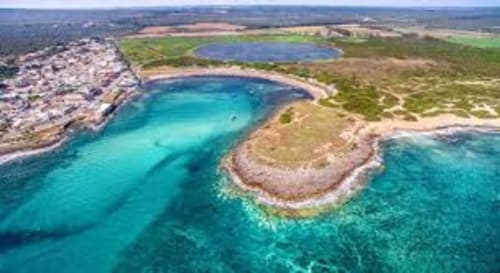
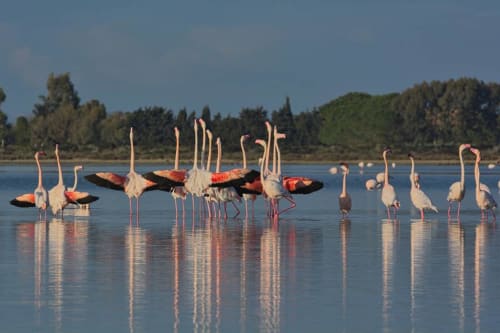
Just a minute away. Salina dei Monaci, located in Torre Colimena in the municipality of Manduria (TA), is one of Salento's natural gems, famous for its unique mix of history, sand dunes, and wildlife. What to See and Do: Pink Flamingos: These are the symbol of the reserve. Although spring and summer are the peak seasons, numerous specimens have been sighted as recently as January 2026. Birdwatching: In addition to flamingos, you can also spot black-winged stilts, herons, and kingfishers.…

San Pietro in Bevagna Beach


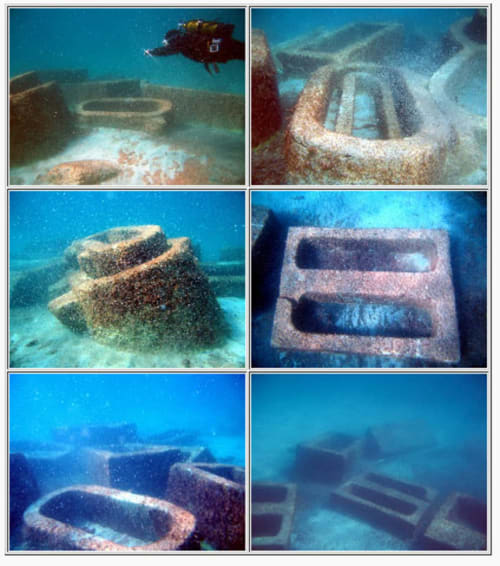
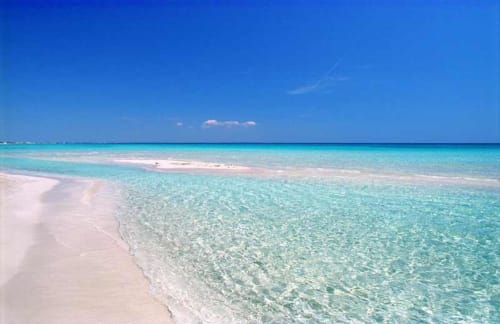
3 minutes from us. A pearl of Puglia's Ionian coast, a seaside village near Manduria. It is famous for its beaches of fine golden sand that plunge into a crystalline sea, often compared to that of the Caribbean. Unmissable Sea and Beaches Chidro River: One of the most important rivers in Salento. Its fresh, icy waters flow directly into the sea, creating a refreshing thermal contrast ideal for circulation. Sarcophagi of the King: About 70 meters from the shore and a few meters below sea level, lie 23 marble sarcophagi from the Roman era (3rd century AD), the remains of a sunken ship's cargo. Borraco Beach: Located to the west, it is a wilder and less crowded area, characterized by white dunes and Mediterranean scrub. 

Porto Cesareo


Just 20 minutes from us. Great for a stroll along the seafront, where you'll find shops, bars, and restaurants. Porto Cesareo is a renowned seaside resort in Salento, Puglia, famous for its fine white sand beaches and crystal-clear waters reminiscent of the Caribbean. Spiaggia delle Dune: One of the most famous, featuring coastal dunes, golden sand, and clear waters, ideal for a northerly wind. Punta Prosciutto Beach: Known for its crystal-clear waters and natural beauty, it is one of the most popular. Torre Lapillo Beach: Offering crystal-clear waters and a wide beach, it is a popular destination for visitors. Isola dei Conigli (or Isola Grande): A natural landmark, accessible by boat or swimming, with free beaches and a relaxing atmosphere.

Manduria city


Just 20 minutes from us. Known as the "City of the Messapians," it boasts an impressive Archaeological Park of the Messapian Walls, where you can admire the triple ring of walls, a vast necropolis, and the famous Fonte Pliniano, a well cited by Pliny the Elder for its constantly constant water level. It is the production center of the renowned Primitivo di Manduria DOC wine. You can delve deeper into this culture at the Museum of the Primitivo Wine Civilization, which offers tastings and historical tours.

Torre Colimena


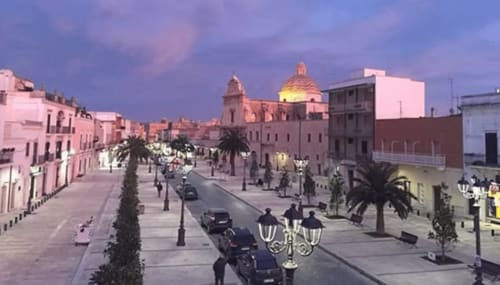
Three minutes from us, with several bars and restaurants.

It's a small fishing village and seaside resort.

It's an ideal destination for those seeking an authentic and wild atmosphere, far from the chaos of more commercial resorts.

What to see and do:

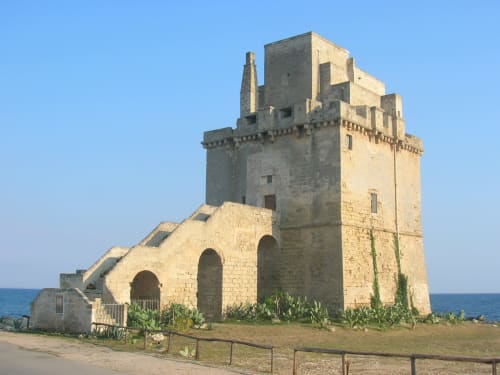
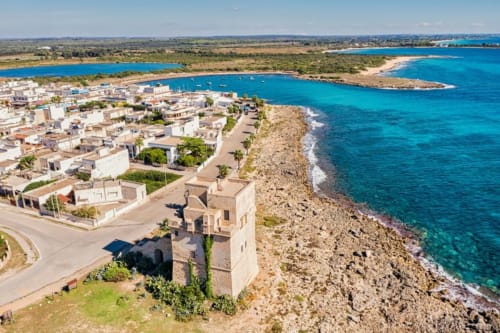
The Coastal Tower: An imposing fortification dating back to 1568, built to defend the territory from Saracen raids. It is one of the tallest in Salento, reaching about 20 meters high.

Salina dei Monaci Nature Reserve: Located near the dunes, it's a protected area where you can admire pink flamingos and enjoy birdwatching.

Beaches: The coastline offers wide expanses of light, grainy sand with shallow, crystal-clear waters. Among the most famous are Spiaggia della Salina and Spiaggia Vecchia Salina.
Punta Prosciutto Beach


Just 5 minutes from us. Punta Prosciutto is one of the pearls of Salento, famous for its towering dunes and clear, tropical-like waters. Located in the municipality of Porto Cesareo (LE), this location offers a mix of unspoiled nature and beach services.

Chidro River and King's Pools


3 km from us.

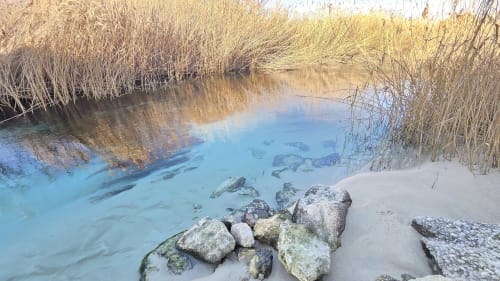
The Chidro River is a fascinating natural spring that originates from underground springs near San Pietro in Bevagna.

Legend has it that the Chidro River was born from the tears of Saint Peter. It is said that the apostle, during a journey to Rome in 44 AD, was forced to stop on the Ionian coast due to a strong storm. Repenting for having denied Christ, he wept, and his tears gave rise to the river's sources and transformed into the shells found on the riverbed, flowing into the Ionian Sea.

Not far away

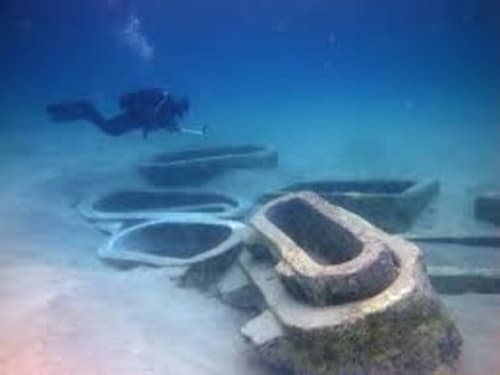
The King's Vasche (or King's Sarcophagi) are an underwater archaeological site located in San Pietro in Bevagna.

What they are: They are 23 sarcophagi made of crystalline white marble (Micro-Asiatic marble) dating back to the 3rd century AD.

History: They were the cargo of a Roman stone-cutting ship that sank about 70-100 meters off the coast while en route to Rome.

Where to find them: They lie at a depth of between 3 and 6 meters, near the mouth of the Chidro River.

Visibility: They are easily visible even with just a mask and fins, making them a popular snorkeling destination.
Santa Caterina e Santa Maria al bagno
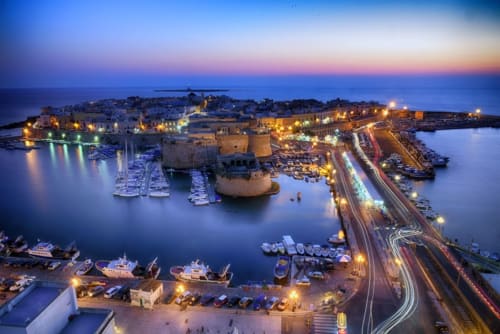


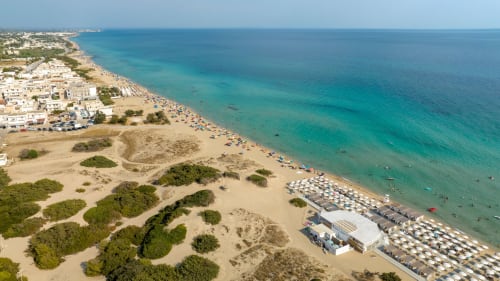
40 minutes from us. These are Nardò's two seaside gems, located on the Ionian coast of Salento. Although close together and connected by a splendid panoramic promenade along the seafront, they offer different atmospheres.

Gallipoli city


Known as the "Pearl of the Ionian," it is one of Salento's most fascinating destinations, characterized by a clear division between the historic center, located on a limestone island, and the new town, connected by a 17th-century bridge. What to see: Historic Center: A labyrinth of whitewashed streets dominated by the Cathedral of Sant'Agata, a masterpiece of Lecce Baroque. Angevin Castle: A fortress surrounded by the sea that controls access to the old town. Greek Fountain: Located at the entrance to the bridge, it is considered one of the oldest fountains in Italy. Hypogeum Oil Mill: Beneath Palazzo Granafei, it bears witness to the city's historical importance in the production of lampante oil.

Taranto city


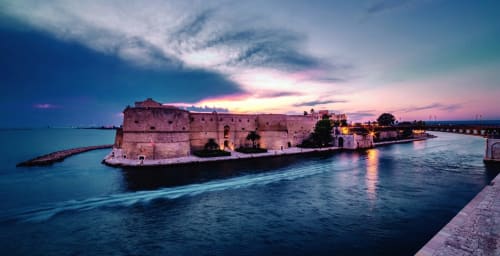
48 km from us. Known as the "City of the Two Seas," it is a treasure of Puglia, strategically located between the Mar Grande and Mar Piccolo. Legendary Origins: According to myth, founded by Taras, son of Poseidon, or by the Spartan colonists Parthenius in 706 BC. Capital of Magna Graecia: It was one of the richest and most cultured cities in the ancient Mediterranean. Today: It is a crucial center for the Italian Navy and preserves a unique historical layering, with underground hypogea and industrial architecture. Must-See Attractions: Aragonese Castle: Fortress overlooking the navigable canal, visitable with free tours run by the Italian Navy. MArTA (National Archaeological Museum): One of the most important museums in the world for Magna Graecia artifacts, famous for its refined "Gold of Taranto." Old Town: An island full of narrow streets, hypogea, and the splendid Cathedral of San Cataldo. Swing Bridge: A symbol of the city that connects the island to the new city, opening to allow the passage of naval vessels. Doric Columns: The last remains of an ancient temple of Poseidon, among the oldest in southern Italy.

Lecce city


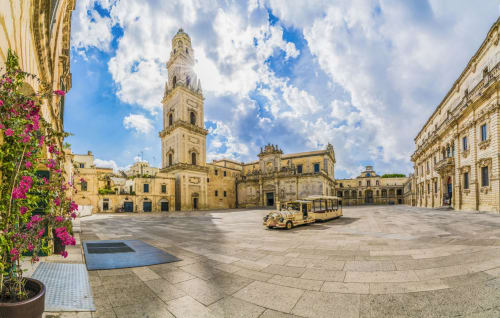
46 km from us. Known as the "Florence of the South," it is the beating heart of Salento and a world capital of Baroque. The city is distinguished by its use of "pietra leccese," a soft, golden limestone that has allowed stonemasons to create intricate and spectacular decorations on churches and palaces. What not to miss: Piazza Sant'Oronzo: The vibrant center, home to the 2nd-century Roman Amphitheater and the 16th-century Sedile. Basilica of Santa Croce: The absolute masterpiece of Lecce Baroque, famous for its incredibly detailed façade. Piazza Duomo: One of the few "closed" squares in Italy, home to the Cathedral, the Bell Tower, and the Bishop's Palace. Castello Carlo V: An imposing medieval and Renaissance fortification located just steps from the center. Teatro Romano: An archaeological gem hidden among the alleys of the historic center.

Otranto city


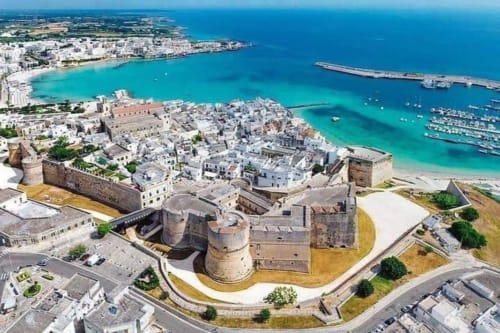
Located on the easternmost tip of Italy, it is currently in the midst of its winter festival "Alba dei Popoli," which kicked off 2026 with events that blend music and culture to celebrate Italy's first light. What to See: Permanent Exhibition at the Castle: Inaugurated in late 2025, the new exhibition "Prehistoric Places and the Deer Cave" offers a multimedia experience with 3D videos that allow you to virtually explore the Deer Cave, otherwise closed to the public. Cathedral of Santa Maria Annunziata: A must-see for its immense Tree of Life floor mosaic and the Chapel of the Martyrs, which houses the relics of the 813 inhabitants killed in 1480. Bauxite Quarry: A former mining site just minutes from the center, famous for its emerald green lake surrounded by red earth walls.

Alberobello city


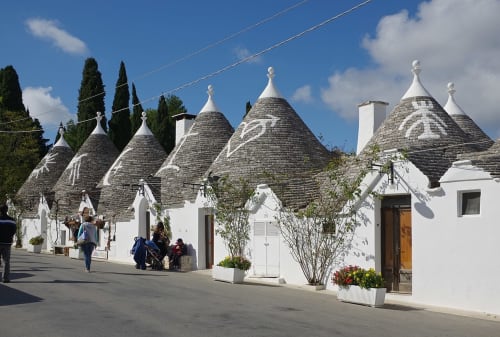
World-famous as the Capital of the Trulli, Alberobello is a unique Apulian town, recognized as a UNESCO World Heritage Site since 1996. What to See and Do: Rione Monti: This is the most touristic and iconic area, with over 1,000 trulli arranged along steep streets. This is also home to the Church of Sant'Antonio, the only trullo-shaped church in the world. Rione Aia Piccola: A more authentic and residential area, ideal for a quiet stroll away from the bustling commercial district. Trullo Sovrano: The only two-story trullo, now a museum illustrating daily life in the past. Belvedere Santa Lucia: Offers the most famous panoramic view of the conical roofs of the historic center.

Ostuni city


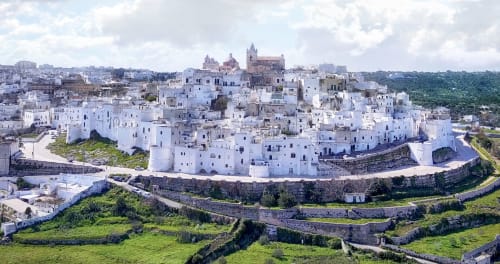
Ostuni, Puglia's famous White City, continues to be one of the Itria Valley's most captivating destinations in 2026. Situated on three hills, its whitewashed alleys reflect the Mediterranean light. 🏛️ What to See: Historic Center: A maze of narrow streets, arches, and stairways. Don't miss the Cathedral of Santa Maria Assunta with its rose window, one of the largest in Europe, and the iconic Arco Scoppa. Piazza della Libertà: The beating heart of the city, dominated by the obelisk of Sant'Oronzo and the town hall.

Grottaglie city


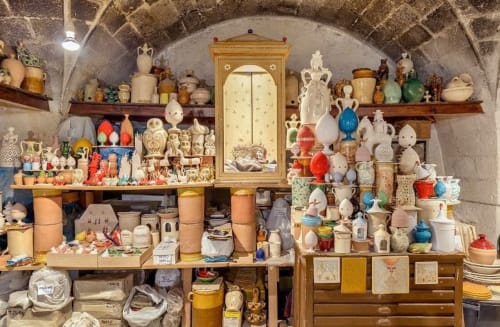
Ceramics is the soul of Grottaglie, a tradition rooted in the Middle Ages that continues to be the city's cultural and economic engine. The "Ceramics District" The beating heart of this art is the neighborhood of the same name, a unique area where over 50 artisan workshops have been carved directly into ancient tuff caves. Strolling through the cobbled streets, you can watch master ceramists at work, shaping local clay using the same techniques passed down for centuries.

Where to eat something...


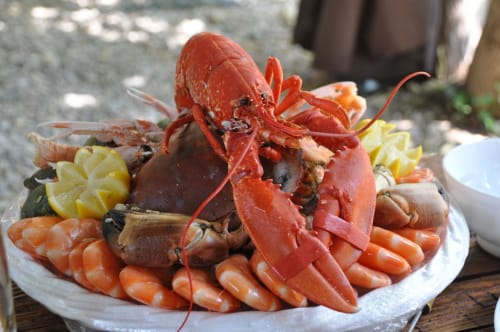
The area has many bars, restaurants, and pizzerias, including takeout. Ask us, we'll be happy to advise you. Apulian cuisine is renowned for its simplicity, based on local, high-quality ingredients from both the farm and the sea. Its key ingredients are flour, extra virgin olive oil, wine, vegetables, and fresh fish.

Nesting and hatching of Caretta caretta turtles


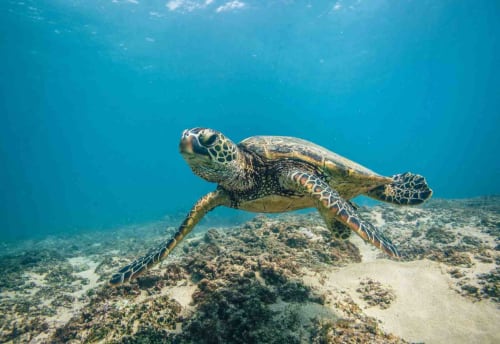
In our area, it's not uncommon to witness the hatching of these spectacular creatures. The hatching of Caretta caretta eggs in Salento is an extraordinary natural event that typically occurs between June and October.